



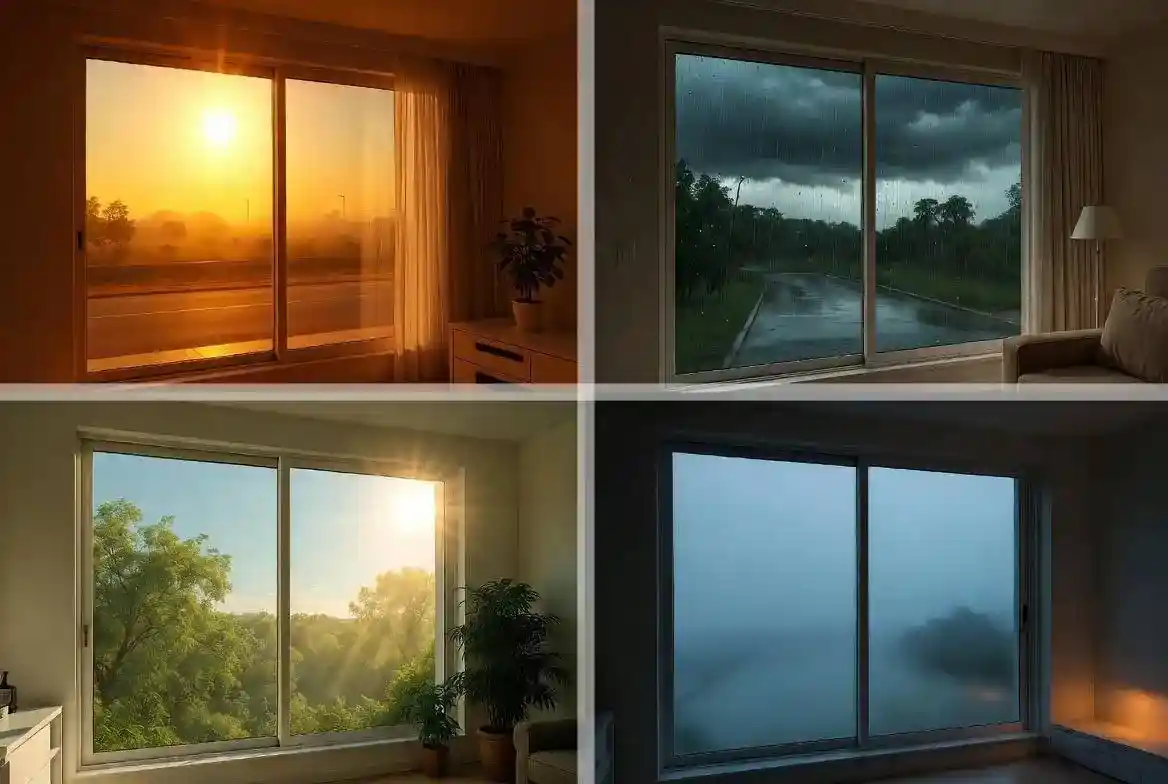
Types of uPVC Windows Best Suited for Indian Weather
If you are planning to install new windows in your home or office, you have probably heard the term uPVC windows. They are one of the most popular window choices in India today — and for good reason. But did you know that not all uPVC windows are the same? Different types of uPVC windows work differently depending on the weather and the kind of room you are installing them in.
India has many types of weather — hot and dry summers in Rajasthan, heavy monsoon rains on the west coast, humid and salty air near the sea, and cold winters in the north. Choosing the right type of uPVC window for your local weather makes a big difference in comfort, energy saving, and long-term durability.
"The right uPVC window does not just look good — it keeps your home cooler in summer, drier in monsoon, and quieter all year long."
In this blog, we will explain the most common types of uPVC windows and help you understand which type suits which kind of Indian weather the best.
What Are uPVC Windows?
uPVC stands for Unplasticized Polyvinyl Chloride. In simple words, it is a very strong plastic that does not bend or flex, does not rust, does not rot, and does not need painting. Unlike wooden or aluminium windows, uPVC windows last for many years without much maintenance.
They are also great at keeping heat out in summer and cold out in winter. For India, where electricity bills can shoot up because of heavy use of ACs and fans, uPVC windows help in saving energy by keeping the indoor temperature steady.
Types of uPVC Windows and Which Weather They Are Best For
1. Casement Windows
Casement windows are hinged on the side and open outward like a door. They give a very tight seal when closed, which means no dust, no rain water, and no insects can get in easily. Explore our uPVC casement window profiles for maximum airtightness.
- Best for: North India (Delhi, UP, Punjab) where summers are extremely hot and dusty winds (loo) blow in April-June.
- Also good for: Coastal cities like Mumbai and Chennai where monsoon rain comes at an angle.
- Why: The tight seal prevents rain water seeping in, blocks hot dusty air, and keeps AC cool air inside for longer.
2. Sliding Windows
Sliding windows open by moving one panel sideways over the other. They are very common in Indian apartments because they do not need extra space to open outside.
- Best for: Urban apartments in cities like Bengaluru, Hyderabad, and Pune where space is limited.
- Also good for: Balconies and rooms with grills or blinds on the outside where outward-opening is not possible.
- Why: Easy to use, requires no extra swinging space, and works well in moderate climates with good ventilation needs.
3. Tilt and Turn Windows
Tilt and turn windows are very smart. They can open in two ways — you can tilt the top inward for fresh air while keeping rain out, or you can turn the whole panel inward for full ventilation and easy cleaning.
- Best for: Monsoon-heavy areas like Mumbai, Goa, Kolkata, and the Kerala coast.
- Also good for: Higher floors in high-rise buildings where you want fresh air without the risk of rain coming in.
- Why: Tilt mode lets in fresh breeze without allowing rain water to enter — perfect during long monsoon months.
4. Fixed Windows
Fixed windows do not open at all. They are purely for letting in natural light and giving a view outside. They are fully sealed from all sides.
- Best for: Staircase areas, lobbies, study rooms, or bathrooms where ventilation is handled separately by exhaust fans.
- Also good for: Sea-facing properties in Chennai, Vizag, or Kochi where salt-laden humid air can damage other window types faster.
- Why: Since they are sealed, no moisture or salty sea air gets inside. They also help reduce noise from traffic or construction nearby.
5. Sliding Folding Windows
These windows Bifold at the same time, stacking neatly on one side when fully open. They are perfect for large open areas.
- Best for: Hotels, restaurants, large dining rooms, and villas in hill stations like Shimla, Ooty, or Mussoorie.
- Also good for: Drawing rooms that open into a garden or terrace area.
- Why: In mild climates with pleasant weather, these windows give an open, airy feel. They can be fully closed during sudden rains or cold spells.
6. Combination Windows (Fixed + Sliding or Fixed + Casement)
As the name says, these are a mix of two window types in a single frame — for example, a large fixed glass panel in the centre with smaller sliding or casement panels on the sides.
- Best for: Living rooms and master bedrooms across India where both a good view and ventilation are needed.
- Also good for: Any climate — the fixed section keeps heat out while the opening sections allow controlled fresh air.
- Why: They give you the best of both worlds. Maximum natural light through the big fixed panel plus fresh air through the opening sides.
Quick Summary — Which Window for Which Weather?
Here is a simple way to think about it:
- Hot & Dusty (Delhi, Rajasthan, UP): Go for Casement Windows — they seal tight and keep dust and hot air out.
- Heavy Monsoon (Mumbai, Goa, Kerala, Kolkata): Choose Tilt and Turn Windows — tilt mode keeps rain out while still letting fresh air in.
- Coastal & Humid (Chennai, Kochi, Vizag): Fixed Windows are safest for areas with salty sea breeze — no rust, no corrosion.
- City Apartments (Bengaluru, Hyderabad, Pune): Sliding Windows work best where space is limited and simple operation is preferred.
- Hills & Pleasant Climates (Shimla, Ooty, Mussoorie): Sliding Folding Windows give a wide open feel and can be closed easily when weather changes.
- Living Rooms Everywhere: Combination Windows give you light, view, and ventilation all in one — a great all-round choice.
Why uPVC Windows Are Perfect for India
India's weather can be extreme. Very hot summers, very heavy rains, high humidity on the coast, and cold winters in the north — regular wood or aluminium windows often struggle to handle all this. uPVC windows, on the other hand, are built to handle all of it without warping, rusting, or peeling.
- They do not absorb heat like metal windows — keeping your rooms cooler in summer.
- They are 100% waterproof — no swelling or rotting in monsoon like wooden windows.
- They do not rust or corrode — perfect for coastal and humid areas.
- They are low maintenance — no annual painting or polishing needed.
- They can be fitted with double or triple glass for extra insulation and noise reduction.
- They are termite-proof — a major benefit over wood in India's tropical climate.
Whether you live in a small apartment in Bengaluru or a bungalow in Chandigarh, there is always a uPVC window type that is perfectly suited to your home and your local weather.
Need Help Choosing the Right Window?
At Enmakk, we help homeowners, builders, and architects choose and install the right uPVC windows for every type of Indian climate. Our team will visit your site, understand your needs, and recommend the best window type for your home.
Get in touch with us today for a free consultation and quote. We are here to make your home more comfortable, energy-efficient, and beautiful — one window at a time.
